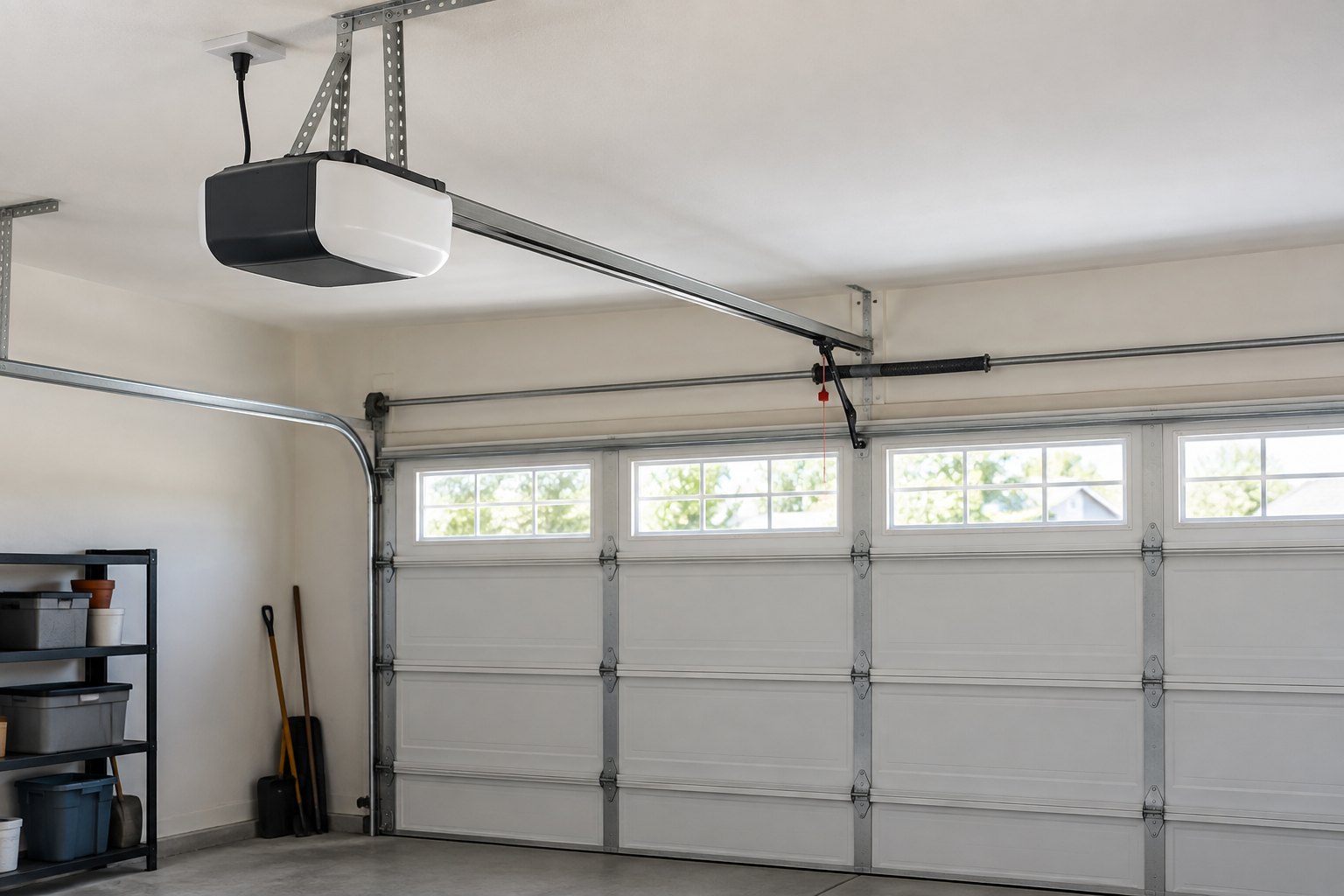
Start with the symptom, not a new motor
A door that will not move does not necessarily have a failed opener. The problem may involve the control, a safety sensor, the power supply, or the door itself. Whether the motor runs, the lights flash, or one control still works can help narrow the conversation.
If the wall button works but a remote does not, say so when you call. If every control produces the same result, that is useful information too. A safely visible model label and the exact pattern of any warning lights are more helpful than guessing which part to replace.
- A remote or keypad has become inconsistent.
- The door starts moving, then stops or reverses.
- The motor can be heard, but the door stays in place.
- A change in noise or vibration makes normal operation uncomfortable.
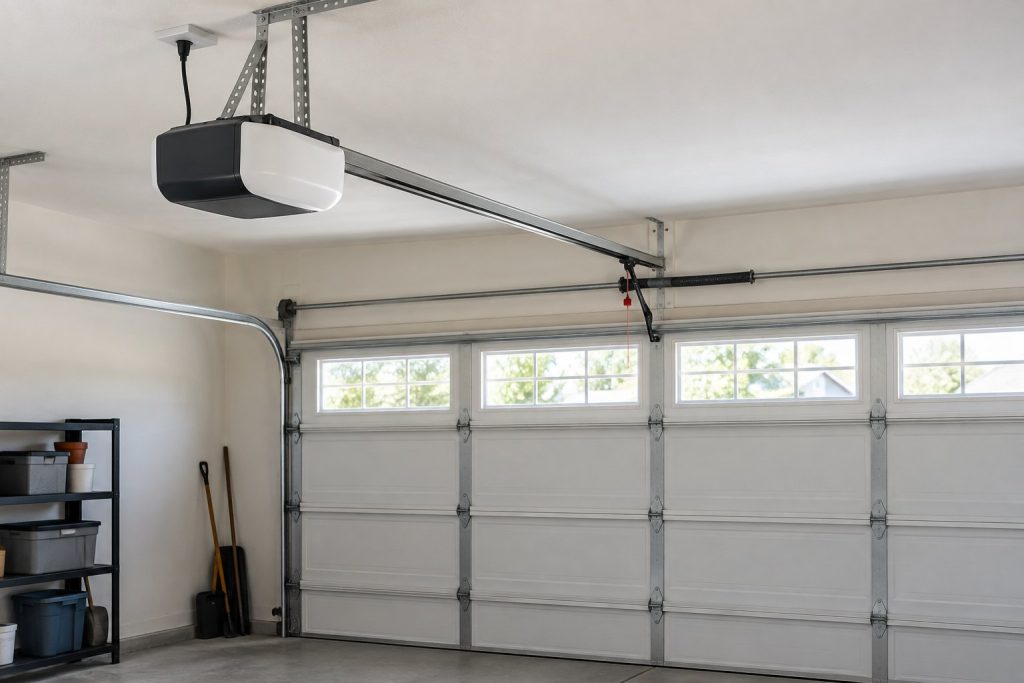
Repair and replacement answer different questions
Repair is about identifying a fault in the equipment you already own. The availability of model-specific parts, the condition of the opener, and the condition of the door help shape that decision. A worn control or replaceable component does not automatically mean the entire opener has reached the end of its useful life.
Replacement is also a chance to reconsider how you enter the garage. Perhaps you want different controls, less vibration near a bedroom, or battery backup on a compatible model. Separate the features you would enjoy from the fault that needs attention so both can be discussed clearly.
Choose features around your garage
Ceiling-mounted chain and belt systems and wall-mounted openers have different installation requirements. Available space, door configuration, electrical access, and the manufacturer's compatibility rules matter more than choosing a style from a photograph.
Some models offer battery backup, connected controls, or additional lighting. Availability varies, and a smart feature may have its own device, network, or account requirements. Ask which features are included with a proposed model and which require separate accessories.
- How many people need a remote, keypad, or other control?
- Is noise or vibration noticeable in an adjoining room?
- Do overhead storage and ceiling height affect available space?
- Would battery backup or a different control arrangement solve a real need?
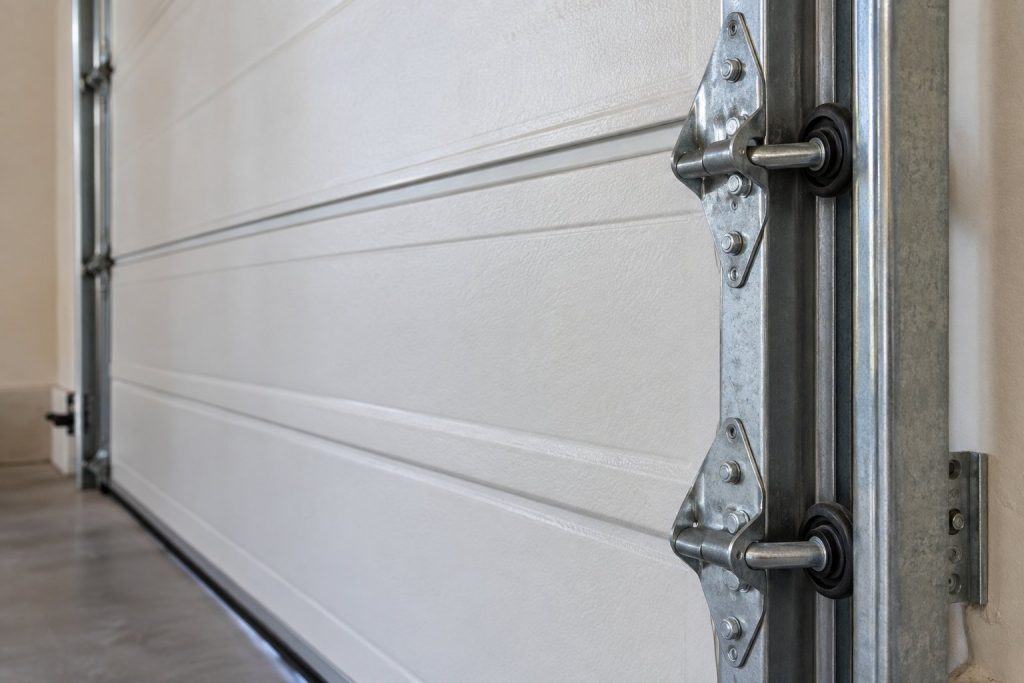
Keep the door and its safety features in the conversation
An opener should be matched to a door that operates correctly. A stronger motor is not a remedy for a damaged or poorly balanced door. The door's condition and the opener's safety functions both belong in any repair or replacement discussion.
Do not bypass a sensor or repeatedly force a reluctant door to move. For opener repair, installation, or accessory questions, call 602-621-6650. Tell us what works, what does not, and which features would make daily access easier.
Questions about garage door openers
Can I keep my current door and replace only the opener?
Often, yes, provided the door is in suitable condition and the new opener is compatible with its size, configuration, and operation. An opener change does not eliminate the need to address a damaged or unbalanced door.
Will my existing remotes work with a new opener?
That depends on the control system and model. Remotes, keypads, vehicle controls, and connected accessories may have different compatibility requirements. List the controls you want to keep before choosing replacement equipment.
Is a wall-mounted opener suitable for every garage?
No. It requires a compatible door system and appropriate space beside the door, among other model-specific conditions. It can be worth discussing when ceiling space matters, but suitability needs to be checked for the actual opening.
Does a connected opener work when the power is out?
Connectivity and battery backup are separate features. Backup operation depends on the opener and battery system, while remote online features may also depend on your home network. Check the proposed model's documentation for its specific behavior.
Talk through the next step
Call Above the Rest Garage Doors Arizona with your door details and questions.